
Consort for Early Music & New Perspectives

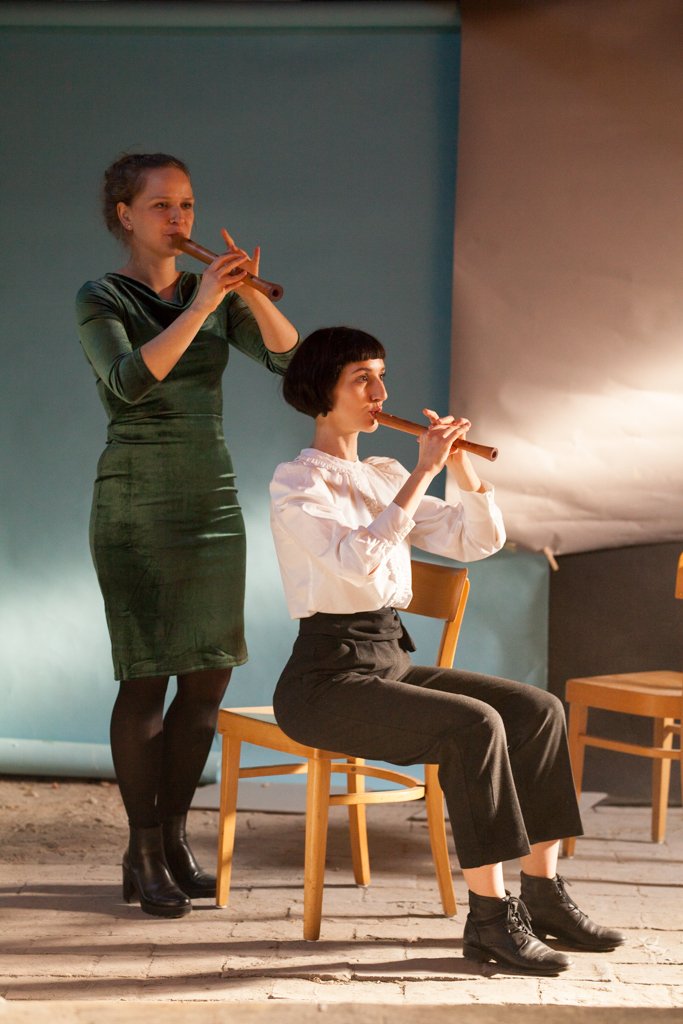
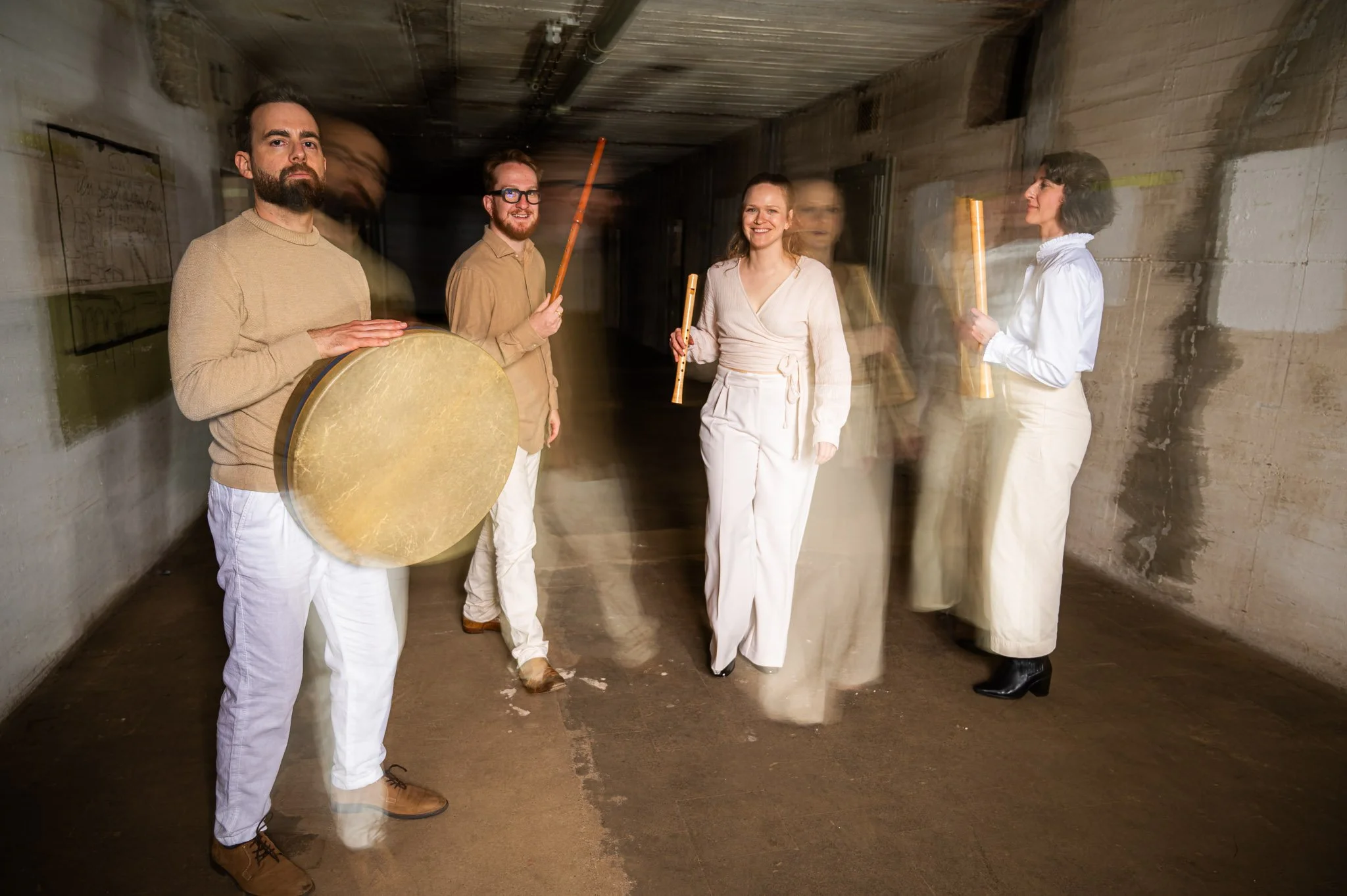
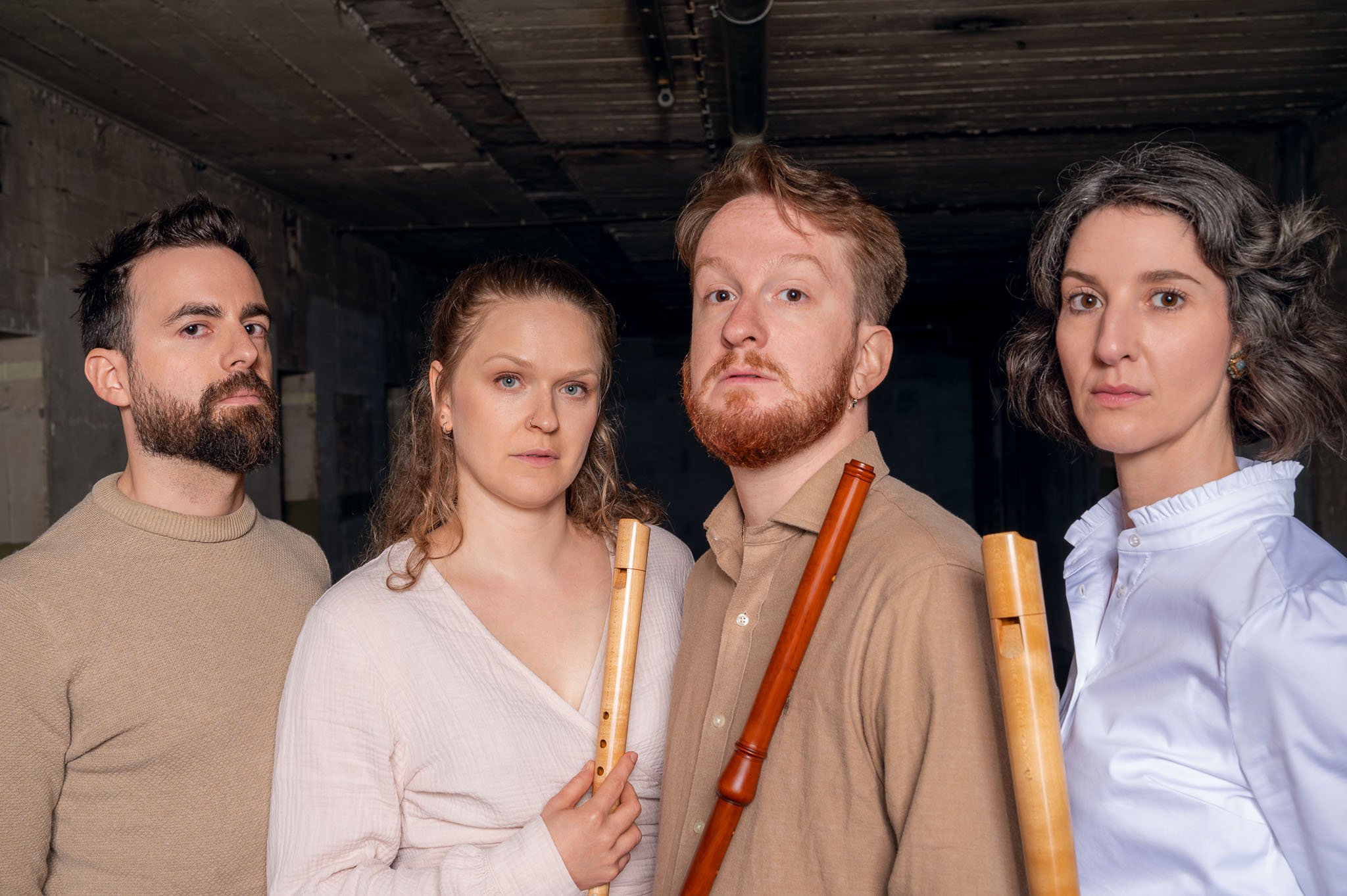
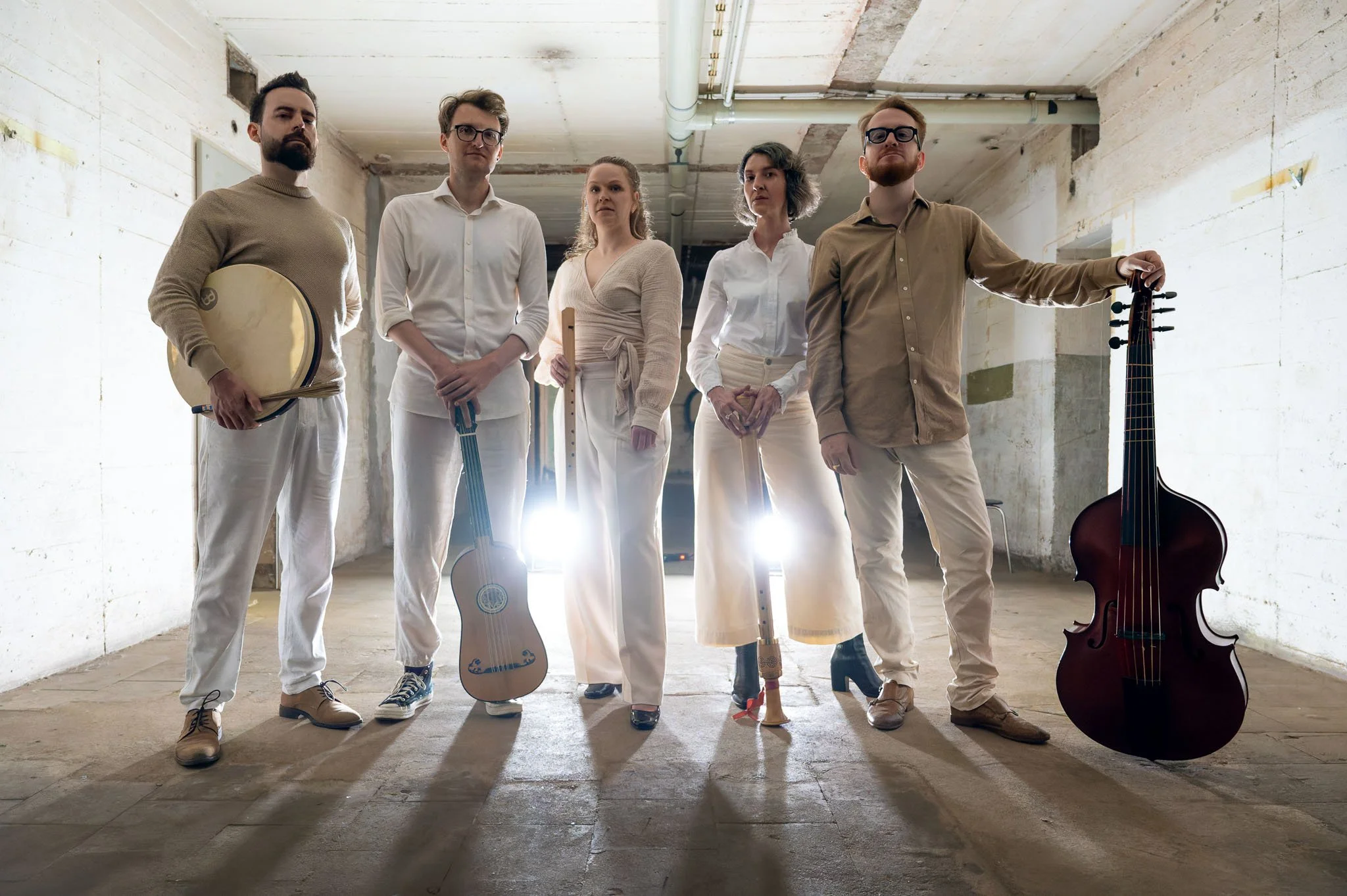
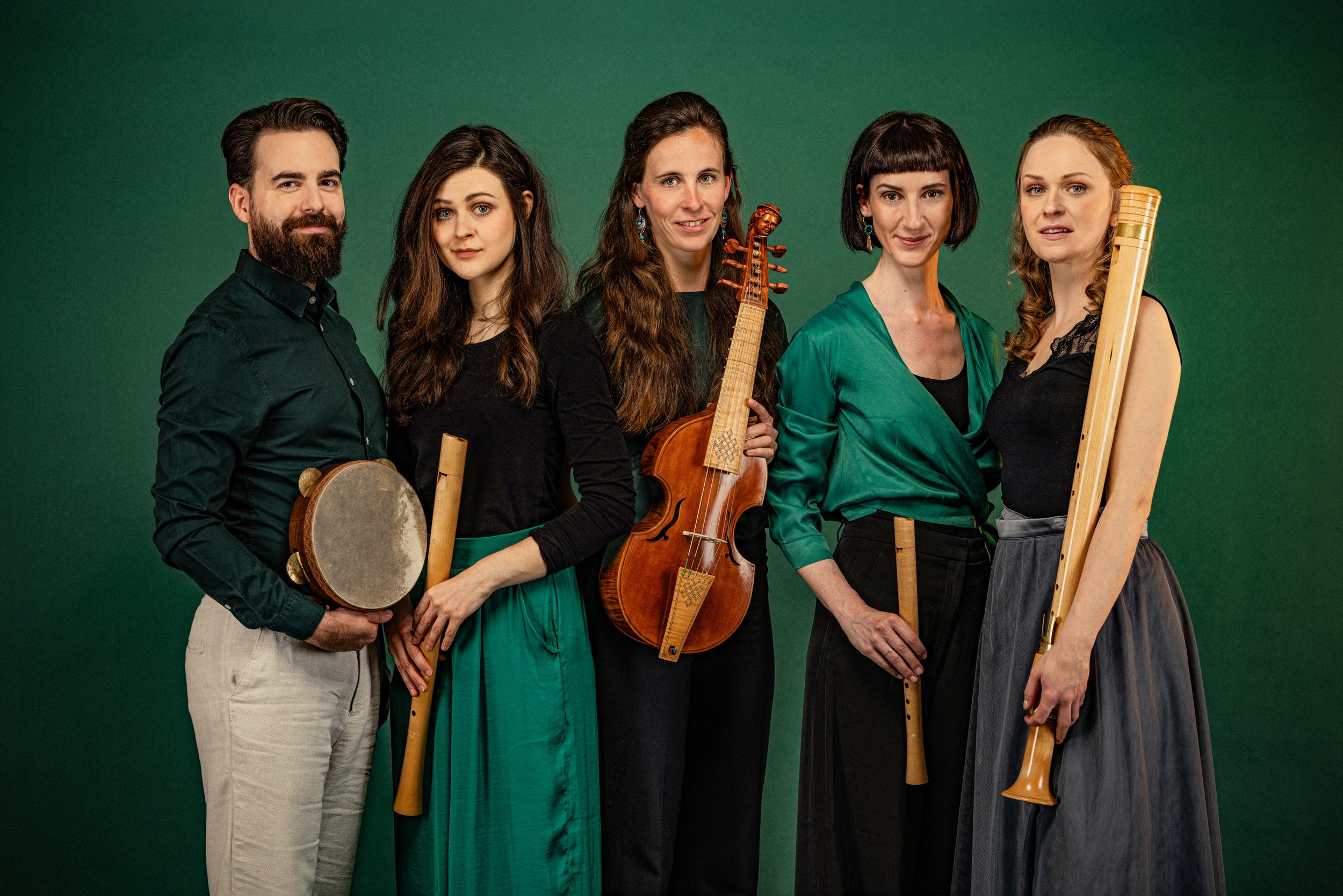
opia unites musicians in a shared pursuit of sonic diversity, rhythmic refinement, musical sensitivity, and an adventurous spirit of exploration. Founded by Eva Leonie Fegers, Alina Loewenich and Fabio Kapeller, the consort is dedicated primarily to the music of the fifteenth to the early seventeenth centuries. Through thoughtfully conceived concert programmes, opia combines historically informed performance practice with its own artistic vision and music-dramaturgical concepts, creating vivid musical narratives that connect past and present.
Since its foundation, opia has performed at renowned festivals and concert series in Austria and abroad, including zamus: early music festival, Festspiele Alter Musik Innsbruck, Festival Grafenegg, the Serenades at Brucknerhaus Linz, the Shakespeare Festival at Globe Theatre Neuss, and the Hohenloher Kultursommer. In its founding year, the ensemble reached the finals of the Tel Aviv Recorder Competition and shortly afterwards became a finalist at the Concorso di Musica Antica Maurizio Pratola in L'Aquila, Italy. opia has also participated in several radio productions for WDR, BR-Klassik, and Ö1.
To realise its artistic vision, opia collaborates closely with musicians and artists from a wide range of disciplines. These collaborations give rise to innovative concert formats that combine historical music with contemporary artistic perspectives. The ensemble released its first CD, anima mea, in 2020, followed by the album as you like it. on the ARS Produktion label in 2023.
watch
as you like it. Trailer
{Video & Sound: Agafia Popwska, Live in Concert, Brotfabrik Bonn, May 2025}
Thomas Ravenscroft (1582-1635): A Round of 3 Country Dances in 1
{Video: A. Popowska, Sound: J. Beck, Passau, 2025}
lullay. Trailer
{Video & Sound by Agafia Popowska; Live in Concert, Linz, January 2025}
Claudio Monteverdi (1567-1643) Sì dolce è'l tormento from: Quatro Scherzo delle Ariose Vaghezza Venice: Alessandro Vincenti, 1624 Arrangement: opia
{Video: Maria Otter, Sound: Stefan Schweiger}
Ξ xi Trailer
{Video & Sound: Agafia Popowska; Live in Concert, Brotfabrik Bonn, February 2025}
Anonymous: Galliard
{Video & Sound: opia, Bunker K101, Köln, June 2026}
members

Eva Leonie Fegers
Eva Leonie Fegers is a musician living and working in Vienna and Eisenstadt – recorder and renaissance transverse flute player,
singer, music teacher and artistically creative artist.

Alina Loewenich
Alina Loewenich is a musician, recorder player, and (theatre) performer. Based in Bonn, she works as an interdisciplinary artist on a wide range of projects.

Fabio Kapeller
Fabio Kapeller is a percussionist and project manager based in Vienna, Austria.
Our Collaborators:
Julia Willeitner, Alexander Gergelyfi, Friederike Vollert, Mauro Colantonio, Bryan Benner, Paula Pinn, Magdalena Kelz, Flóra Fábri, Adriaan Lauwers, Agafia Popowska
impressions



programmes
as you like it.
As you like it – humorously, sensually, dramatically.
Opia delves into the musical depths of this game - blending literature from the late Middle Ages through the Renaissance to the early Baroque.
In this atmospheric program, the musicians interpret sensual songs and lively dances with singing, recorders, viol, harpsichord and percussion instruments. In different formations, they vary the timbres from intimate to splendid chamber music.
Inspired by Shakespeare's comedy of mistaken identity, we also move musically between the worlds: We discover the savoir vivre at the French court, hurry to the convivial Viennese tavern, flee from the plague into the warm embrace of English melancholy, overcome deep rivers in the solitude of the German forest, feel the mild Italian west wind on our skin and dream of great love on the Spanish coast at night. The ears are buzzing, the head is wondering: Is it the original, an adaptation or is it something we wrote ourselves? Who knows, who knows…

lullay.
Christmas time is the time for songs: the warm sound of music conveys a sense of security.
Songs with gentle melodies, repetitive motifs that soothe the child to sleep. The tradition of the lullaby can be found in all cultures - we can therefore assume that Mary and Joseph also sang songs to their newborn son at the crib: Out of love and care, perhaps to alleviate fear and also pain.
We know that the shepherds and angels also made music: songs of praise and joyful, solemn sounds about the arrival of God on earth. God who became man to redeem us: The miracle of Jesus' birth.
In lullay. you can hear works from the Advent and Christmas season that tell of intimacy, hope and immeasurable joy. Vocal and instrumental music that invites you to contemplate, to rest, but also to celebrate the incarnation of God and the magic of life.
opia interprets old songs by anonymous composers in traditional or original settings, including compositions by Michael Praetorius, Biagio Marini, Johann J. Froberger, Samuel Scheidt and William Byrd.
Instrumentation: recorders, viols, plucked strings/harpsichord, percussion, recitation & vocals
Ξ xi
With Ξ xi, three musicians embark on the exciting, experimental sound world and improvisational music practice of the 14th century. During the time of the Ars nova in France, the development of polyphony and a complex notation practice took place as well as artistic song forms such as Ballade, Rondeau and Virelai evolved - all of them complex and expressive compositions.
A similar development can be seen around the time in Italy. Popular secular genres are usually associated with stylized themes: in the Caccia hunting scenes are set to sound, in the Ballata one can listen to poetry and in the Madrigal, shepherd idylls, love, suffering and morality are melodized.
There are compositions by Landini, da Bologna, da Firenze a.o.
Eva Leonie Fegers – recorder & vocals
Alina Loewenich – recorder & recitation
Fabio Kapeller – percussion
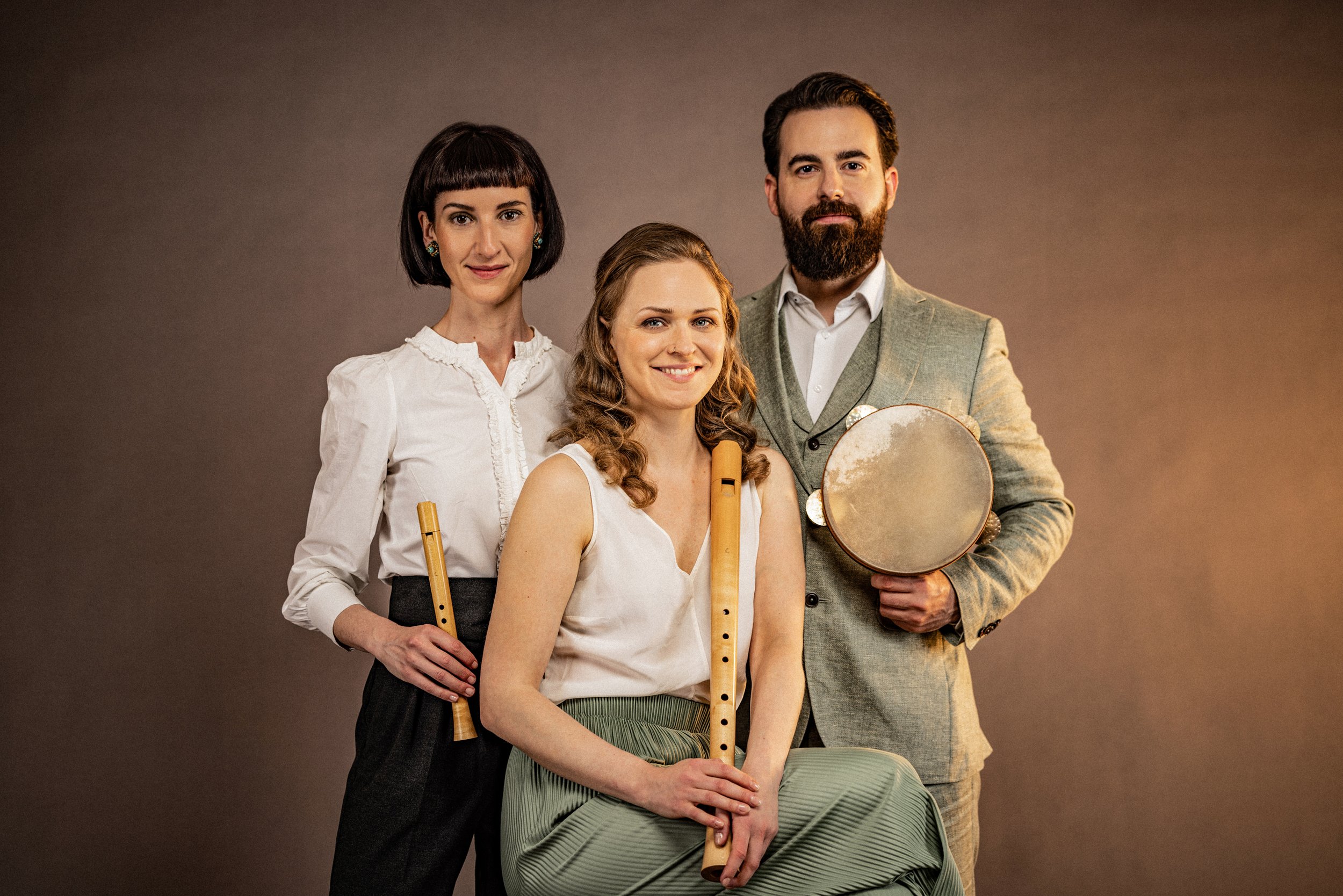

inter:nos
With their programme inter:nos, the opia consort brings together Early and New Music in a multi-layered tapestry of sound.
Improvisation plays a central role throughout the programme, serving as a connecting thread between the different musical worlds. With recorders, voice and percussion instruments, the musicians create archaic yet sensual soundscapes. Melodies unfold with a simple intensity, while rhythm serves both as a unifying force and as a source of contrast. The result is a delicate sonic space in which not only different musical languages encounter one another, but also centuries and cultures.
The opia consort invites its audience to surrender to this space for the duration of the concert: to let themselves drift, to immerse themselves, and to experience the music not merely as listeners, but as emotionally engaged participants.
Eva Leonie Fegers – recorder & vocals
Alina Loewenich – recorder & recitation
Fabio Kapeller – percussion
ad astra
Songs of love can be heard right up to the starry sky - portraying joy and pain, desire and despair, intimacy and rejection.
Musically, we are located in the Italian cultural centers of the 16th century: Rome, Milan, Naples and Venice. Melancholic and humorous songs as well as swinging dances give us an impression of a human being and his search for love.
With recorders, vocals, viola da gamba and percussion, opia interprets works by Fattorin da Reggio, Vincenzo Ruffo, Giovanni da Nola a.o.
anima mea
The soul unites the variety of all emotions and the spiritual processes. During the Middle Ages and the Renaissance, the existence of the soul, which according to the view also controlled physical processes, was assigned not only to humans but to all living beings.
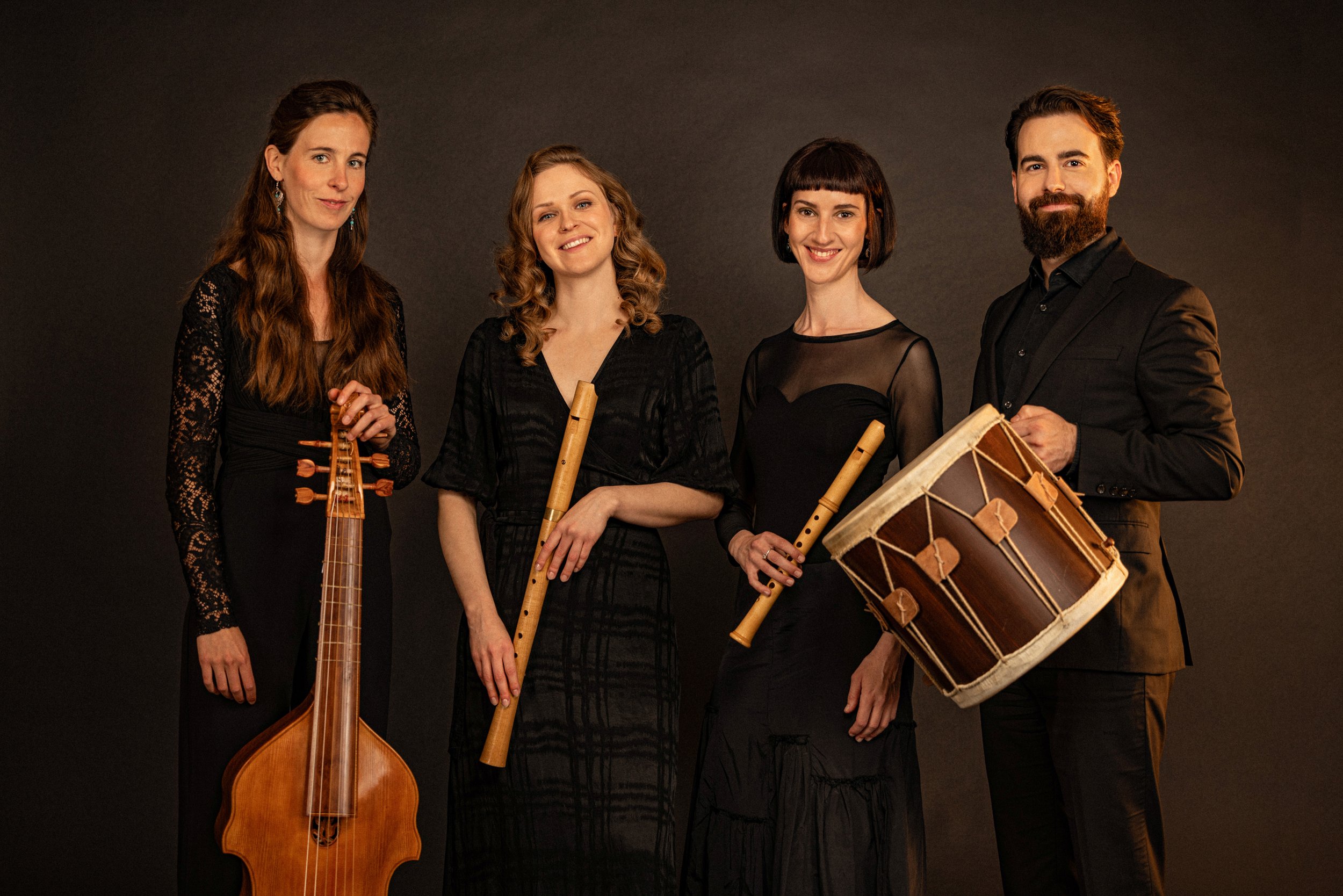
The anima mea program combines French and Italian vocal and instrumental music from the 14th to the 16th century - the Ars nova, the Trecento and the Renaissance. From the development of polyphonic music to complex counterpoint. Instrumented, arranged and reconstructed for vocals, recorders, fiddle, viola da gamba and percussion. There are compositions by Machaut, Landini, da Nola, Scotto and others.
Instrumentation: recorders, viol, percussion, recitation & vocals
l’amour fou
The songs are as unpredictable and diverse as love itself.
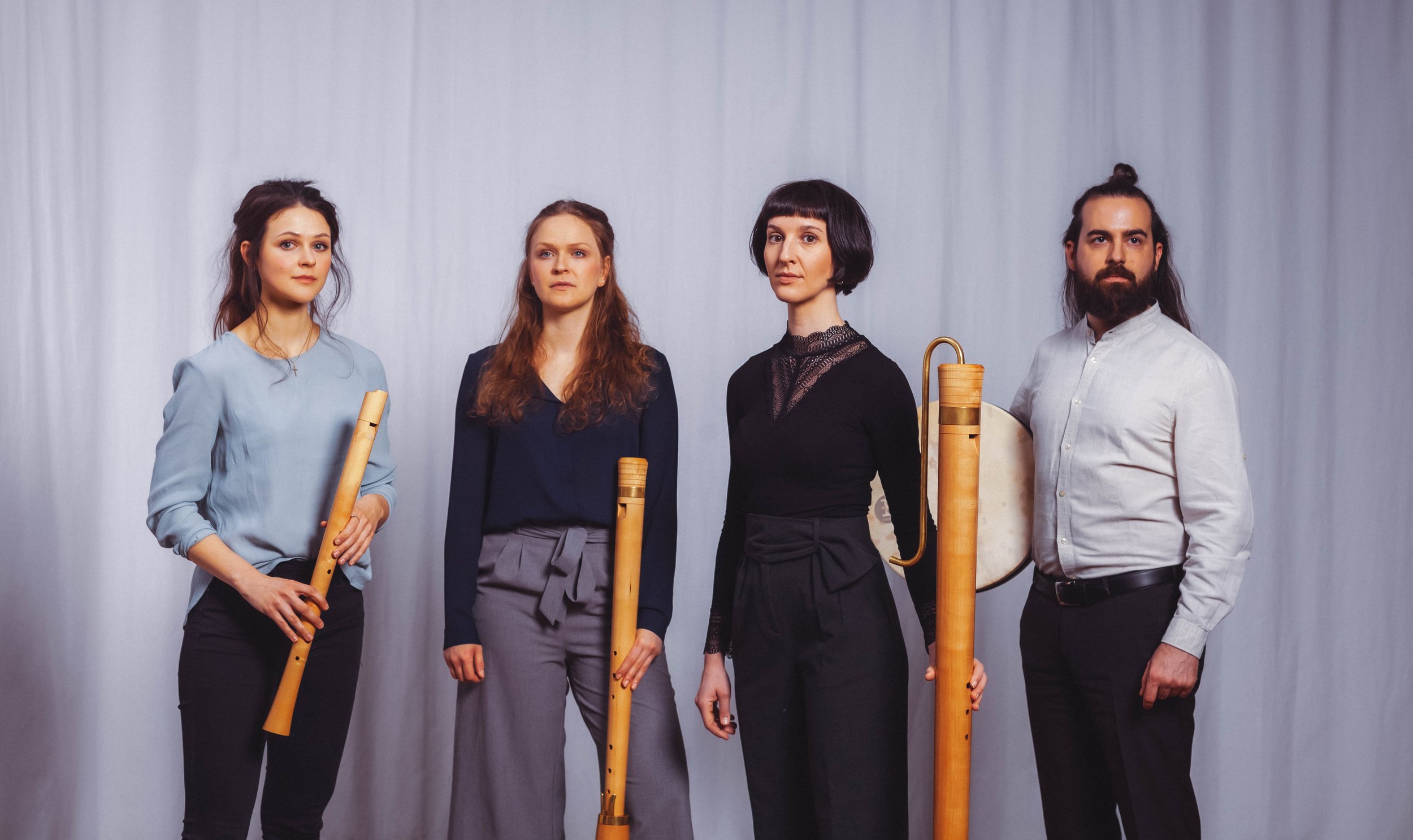
The program focuses on French Renaissance chansons - interpreted with recorders, vocals and percussion. The works revolve around the theme of love and the different emotional states of the lovers: hope and disappointment, bliss and despair, desire and contempt only reflect a fraction, portrayed by secular compositions from the Franco-Flemish school. In this, the polyphonic and complex contrapuntal compositions of the 15th and 16th centuries experienced an enormous development - the emotional, direct expression though was never lost.
opia plays works by Alexander Agricola, Antoine Brumel, Nicolai Gombert, Josquin Desprez a.o.
Instrumentation: recorderconsort & percussion
sonder
sonder { /ˈsɑndɚ/ } looks at the encounter: the moment when we look at each other and recognize the other person as a valuable, multifaceted individual. The moment of encounter carries with it the possibility of creating intimacy and connection from a fleeting moment - touching experiences that leave traces in our own lives and broaden our perspective on life and people.
In sonder, the complex lives, cultures and emotions are explored through sound. The musicians, with their personal stories and individual sound languages, enter the moment of encounter and connect in the compositions through singing, recorders, Viola da gamba and percussion.
Works by John Dowland, Cipriano de Rore, Diego Ortiz, Luca Marenzio, Jakob Arcadelt and Anonymous will be heard.
Instrumentation: recorders, viol, percussion, recitation & vocals
reviews
„...I often just sat there with my mouth agape – lost in a world to which you had transported me with your wonderful music. It really was one of the very best concerts I have ever experienced. This was down not only to your incredible musical skill, but also to the way you performed the pieces, and the joy you radiated whilst making music together. And all of this was spiced up by the subtle humour of your comments. ...“
„opia manages, in an impressive way, to do justice both to the past – from which their music and instruments originate – and to the present, without creating any imbalance. Through their art, opia have achieved a highly complex yet thoroughly convincing balancing act between yesterday and today.“
„... surprises at its debut appearance in Neunstetten with very modern and freshly interpreted early music from the Middle Ages to the early Baroque ... a self-contained ensemble that, with the wonderful singer, gives the very successful musical evening a very special note.“
„Eva Leonie Fegers excelled on the recorder, the Renaissance transverse flute and with her wonderful singing; Alina Loewenich fascinated the audience with her beautiful recorder playing; Magdalena Kelz played the viol with inspiration and enthusiasm; Fabio Kapeller shone with great percussion instruments.“